In the Media
Damaged Building and Lack of Utilities: Who Makes Decisions and What Co-Owners Should Do
In the Media
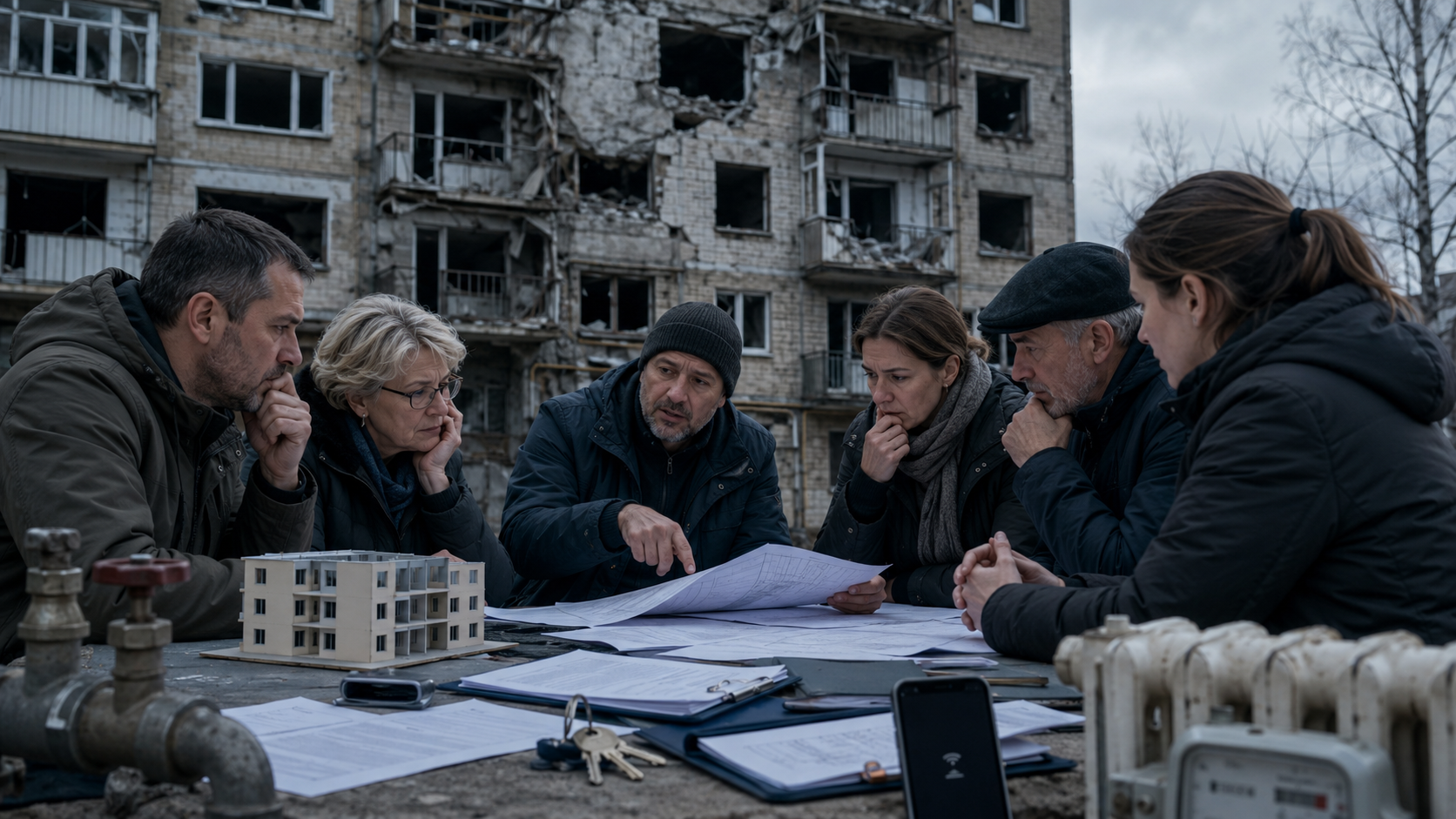
After massive shelling, a significant number of apartment buildings in Ukraine have been left without electricity or heating, or have suffered serious damage. In such circumstances, the issue of restoration is no longer merely technical — it becomes a matter of management and responsibility. And the key question is: who exactly makes decisions and how quickly can they be implemented?
The UNIAN article raises the issue of the possibility of establishing an ACMH as a building management tool, especially in a situation where centralized services are overloaded and cannot always respond promptly to residents’ needs. In such circumstances, co-owners are increasingly looking for an alternative — a mechanism that allows them to independently make decisions on restoration, financing, and cooperation with contractors.
LESHCHENKO & PARTNERS partner Anastasiia Blyndu notes in her comment that today, establishing an ACMH is not just a form of management, but an instrument of real influence over the condition of the building and the speed of decision-making. An ACMH allows co-owners to independently determine repair priorities, control the use of funds, enter into contracts directly with contractors, and participate in state and municipal restoration programs. In addition, this form of management provides legal certainty in relations with service providers.
“Today, an ACMH is an instrument of self-organization for co-owners in a situation where the speed of decisions directly affects the comfort and safety of residents,” Anastasiia Blyndu emphasizes.
In fact, this is about a change in approach: from waiting for action by municipal services to independent building management. In wartime conditions, this is especially critical, since delays in restoration may directly affect not only comfort, but also the safety of living conditions.
What this means in practice and what co-owners should do if the building is damaged or utilities are unavailable:
This algorithm allows co-owners to move from passive waiting to taking control of the situation. At the same time, it is important to take into account the legal nuances of establishing an ACMH, the procedure for decision-making, and the responsibility of the board in order to avoid further conflicts.
The full article is available at the link:
https://www.unian.ua/society/chi-mozhna-stvoriti-osbb-v-chastini-budinku-yak-i-de-zareyestruvati-osbb-13290393.html